
Day Trip to Aegina from Athens: Ferry Times, Route and Costs
Aegina lies about 27 km from Athens in the Saronic Gulf, making it one of the most accessible island escapes from the capital.
Is Aegina Worth Visiting on a One-Day Trip from Athens?
Aegina is worth a one-day trip for an island atmosphere without an overnight stay. The island sits 40 minutes by hydrofoil or 75 minutes by conventional ferry from Piraeus. A single day covers Aegina Town's harbour, the Temple of Aphaia (part of the ancient triangle with the Parthenon in Athens and the Temple of Poseidon at Sounion), Agios Nektarios monastery, or Perdika fishing village—but not all at once.
Travellers in Plaka, Syntagma or Monastiraki reach Piraeus Port via metro line 1 or 3 in under 30 minutes. Frequent ferries from 07:00 to 19:00 support seven-to-nine-hour visits.
How Much Does a Day Trip to Aegina from Athens Cost?
Return ferry tickets range from €20 (conventional) to €32 (hydrofoil). Metro from central Athens to Piraeus costs €1.20 each way, so €2.40 return. Local bus fares start at €1.70; taxis cost €8–€17. Temple of Aphaia entry is €8.50. Taverna meals run €13–€21.
| Option | Transport | Local travel | Food & entry | Approximate total |
|---|---|---|---|---|
| Conventional ferry (self-guided) | €20 return + €2.40 Athens metro | €3.50–€8.50 bus/taxi | €21–€30 | €47–€61 |
| Hydrofoil (self-guided) | €32 return + €2.40 Athens metro | €3.50–€8.50 bus/taxi | €21–€30 | €57–€73 |
| Organised day tour | From €25 (excl. ferry) + €20 ferry | Included | €21–€30 | €66–€75 |
Organised tours may bundle hotel pickup and guides but often exclude ferry tickets and admission—confirm inclusions.
Compare tours
This search box is provided by a booking partner and sets cookies.
Booking with a partner may earn this site a commission at no cost to you.
How to Get from Athens to Aegina: Piraeus Ferries and Day Tours
Aegina sits 27 kilometres from Athens, with sailings from Piraeus Port.
Central Athens and airport connections to Piraeus
Metro Line 1 links Monastiraki with the port; Line 3 runs from Athens International Airport every 30 minutes. A taxi or pre-booked Athens city center to Piraeus Port transfer suits heavy bags.
| Option | Best for | Live check |
|---|---|---|
| Metro Line 1 | Light bags from Monastiraki or Thiseio | Strike and works notices |
| Metro Line 3 | Airport arrivals, trains every 30 minutes | Service frequency that day |
| Taxi | Groups and luggage, Visa or Mastercard accepted | Traffic and port access |
| Pre-booked transfer | Very early sailings, fixed pickup time | Confirmed pickup address |
Athens to Aegina Ferry Duration, Departures and Arrival Ports
Sailings leave Piraeus every 30 to 60 minutes between 07:00 and 19:00. Hydrofoils such as Aegean Flying Dolphins cross in 40 minutes; conventional Saronic Ferries vessels, which carry cars, take 75 minutes. Foot-passenger fares start near €10, fast services around €16, and roughly €25 with a car. Boats dock at Aegina Town.
Aegina Ferry Trip or Guided Day Tour: Which Is Best?
Independent travel gives control over beach time and which sailing to catch. A tour bundles island transport, which matters for the Temple of Aphaia, not walkable from the harbour. A day trip to Hydra and other best island day trips from Athens are worth comparing.
One-Day Aegina Itinerary from Athens
Aegina Town, Kolona and the harbour walk
Aegina Town can be explored on foot from the ferry harbour. Kolona, a ten-minute walk northwest from the port, preserves the remains of the ancient Temple of Apollo; a single standing column marks the site. The Archaeological Museum of Aegina, adjacent to Kolona, interprets finds from the settlement and sanctuary—confirm current opening hours through the Hellenic Ministry of Culture before arrival.
The Tower of Markellos, a fortified stone structure near the harbour front, reflects the island's Venetian and post-Byzantine periods. The harbour walk connects the ferry quay with waterfront tavernas, the Church of Agios Nikolaos, and neoclassical buildings along the port road. Leave at least 30 minutes before the scheduled return ferry departure.
Temple of Aphaia, Agios Nektarios and Paleochora
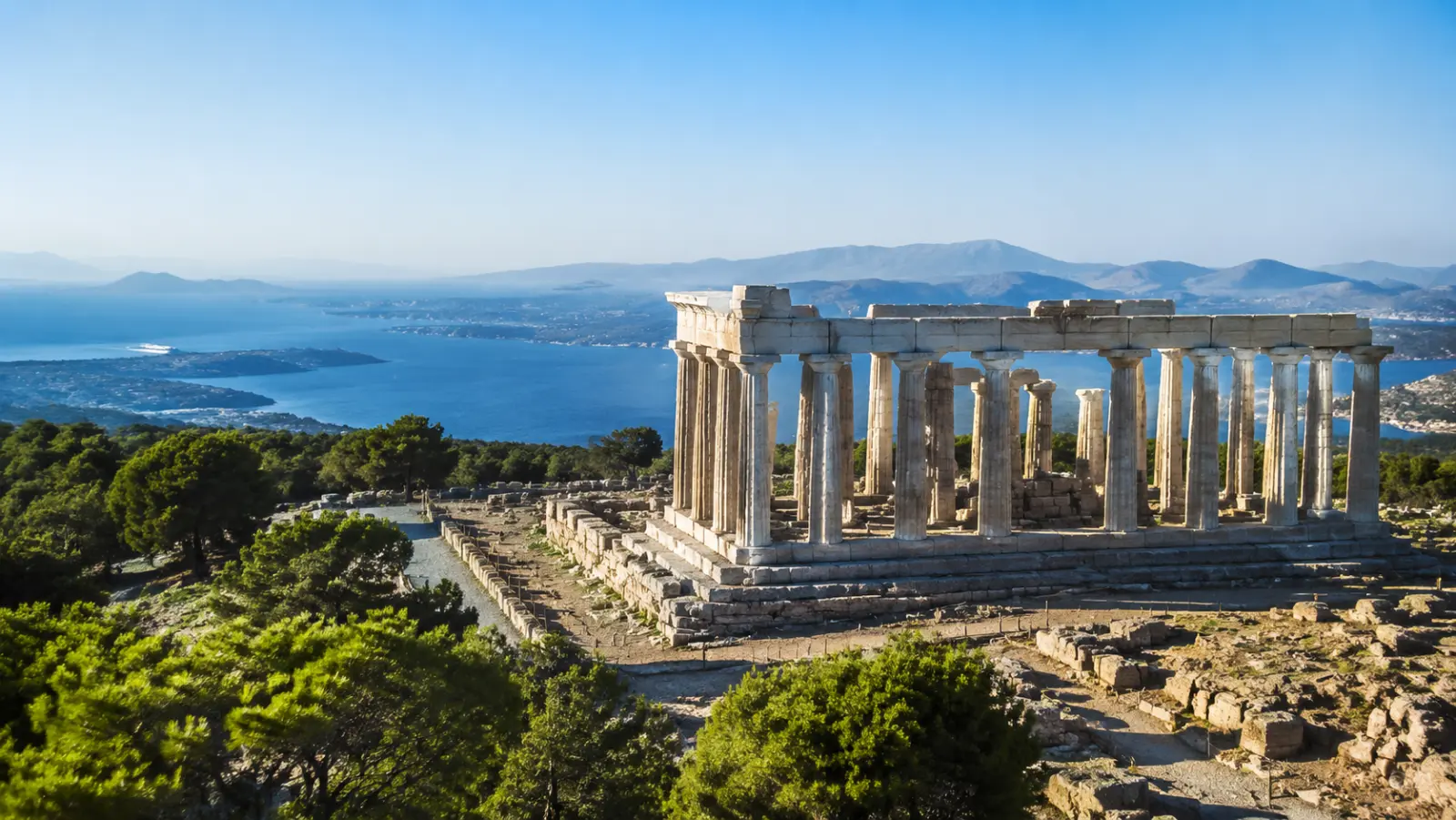
The Temple of Aphaia, a Doric temple dating to approximately 480 BC, stands on a pine-covered hilltop in the northeast with views across the Saronic Gulf. The sanctuary preserves 25 of its original 32 columns and is linked in the sacred-triangle narrative with the Parthenon in Athens and the Temple of Poseidon at Sounion.
Agios Nektarios Monastery is an active Orthodox religious site; visitors should dress modestly, covering shoulders and knees. Paleochora, the island's medieval capital, lies inland and consists of ruined Byzantine churches scattered across hillsides. Check current opening hours and ticket categories for the Temple of Aphaia before departure.
Aegina Beaches, Perdika or Moni Island: Best Day-Trip Route
For a short Aegina visit, choose one coastal route. Marathonas Beach, roughly 5 kilometres southeast of Aegina Town, offers shallow water and is accessible by local bus or taxi. Perdika, a fishing village on the southern coast, serves as an alternative for waterfront tavernas and a quieter harbour.
Moni Island, a small uninhabited islet visible from Perdika, can be reached by seasonal boat services; access depends on weather conditions and local boat operations. A Moni Island excursion adds at least two hours. Choose Marathonas Beach for swimming close to Aegina Town, Perdika for seafood lunch, or Moni Island only when ferry timings and confirmed boat availability allow.
Getting Around Aegina on a Day Trip from Athens
Aegina Town works on foot, but the Temple of Aphaia, Agios Nektarios Monastery and Perdika need transport.
Bus, taxi, rental car and scooter options
KTEL Aiginas buses run from Aegina Town to Aphaia, Agios Nektarios and Perdika at the lowest cost, though schedules thin out outside peak summer—check timetables at the port kiosk. Licensed taxis wait at the port and charge by meter or agreed fare; confirm which before setting off. Scooter and car rental desks sit near the harbour; you need a valid licence, third-party insurance, a deposit (usually on a credit card) and a helmet for two-wheelers.
Saronic Ferries and other conventional ferries carry cars; Flying Dolphins hydrofoils are passenger-only. Vehicle bookings need passenger count, registration and dimensions, plus arrival at the port gate 30–45 minutes before foot passengers. At around €25 for a standard car plus fuel and boarding queues, a bus or taxi circuit is faster for a focused day visit.
Best Time for an Aegina Day Trip and What to Pack
Aegina remains accessible year-round, though seasonal conditions shape ferry reliability, archaeological site comfort and beach appeal.
Seasonality, ferry reliability and heat planning
May–June temperatures average 17–21°C, ideal for exploring the Temple of Aphaia. July–August push highs to 34°C—visit the temple before midday and reserve afternoons for shaded harbour walks or beach breaks. December–February see daytime highs around 15°C and lows near 9°C; ferries operate normally, but pack layers and check live sailing updates for wind-related delays.
Where to Try Seafood, Mezedes and Aegina PDO Pistachios
Aegina pistachios carry Protected Designation of Origin status; look for PDO labelling, sealed packaging and recent harvest dates at harbour vendors or specialist shops. Waterfront ouzeries serve fish mezedes—grilled octopus, anchovies, fried squid—paired with ouzo. Verify ingredient freshness and check airline or ferry carry-on limits for pistachio quantities; vacuum-sealed packs travel better.
How to Book an Aegina Day Trip from Athens
Ferry tickets and guided tours to Aegina are available through ferry-company websites and licensed tour operators, with departures scheduled throughout the day from Piraeus Port.
What to check before paying for ferry tickets or a tour
Verify departure and return times before purchase, ensuring at least seven to nine hours on Aegina. Confirm whether the booking covers a conventional ferry (75 minutes) or hydrofoil (40 minutes). Check if the fare includes vehicle passage—taking a car costs around €25, versus €10 per person walk-on or €16 for Flying Dolphins. Clarify luggage rules, meeting points and cancellation terms. If visiting the Temple of Aphaia, confirm whether the €8.50 entrance is covered or payable on arrival.
Booking Your Aegina Ferry Return: A Simple Step-by-Step Guide
Decide between independent ferry travel or a guided tour. Select a morning outbound sailing—ferries run every 30 to 60 minutes from 07:00 to 19:00—and book a return with comfortable margin. Purchase tickets through the ferry company's verified platform or a licensed reseller, entering passenger names and any vehicle details. Save the confirmation, which should state departure time, gate designation and cancellation terms. On travel day, recheck live displays for gate changes and verify weather conditions.
Compare transfer prices
This search box is provided by a booking partner and sets cookies.
Booking with a partner may earn this site a commission at no cost to you.
The pistachios are not a souvenir cliché
Aegina's pistachios carry PDO status and are the island's actual agricultural backbone, not a gift-shop invention. They are sold loose along the harbour front where the ferries dock, which is convenient because it is the first thing you see and the last thing you pass. Buy them at the end of the day rather than the start — they are heavy, and you will be carrying them around the Temple of Aphaia otherwise. The island holds its Fistiki Fest in mid-September, when the harbour is busier than the ferry timetable alone would suggest.
FAQ
Common questions about planning and taking a ferry day trip to Aegina from Athens are answered below.
How long is the ferry from Athens to Aegina?
Ferries depart from Piraeus Port. High-speed hydrofoils take 40 minutes; conventional vehicle ferries take about 75 minutes. Check the live operator timetable when booking, as schedules and durations vary by season and service type.
How much should I budget for a day trip to Aegina from Athens?
Budget for ferry tickets, Athens-to-Piraeus transport, meals, island transport and optional archaeological admission. Foot-passenger fares start at €10; hydrofoils cost €16. Add local bus or taxi fares, lunch and the €8.50 Temple of Aphaia entrance fee. Verify live prices with operators.
Can I visit Aegina without a car?
Aegina Town, the harbour walk and Kolona archaeological site are walkable. Temple of Aphaia, Agios Nektarios Monastery, Agia Marina beach and Perdika village require a bus, taxi, rental scooter or tour transfer. Choose one out-of-town cluster—ancient sites or coastal villages—rather than attempting the entire island in a single day.
Is a guided Aegina tour better than going independently?
Independent ferries suit flexible travellers who prefer their own schedule; guided tours suit those wanting coordinated transfers, commentary and pre-arranged logistics. Tours typically include ferry tickets, island transport and sometimes lunch or site entry, but verify whether hotel pickup, entrance fees and cancellation terms are covered. Both options work; the choice depends on preference for structure versus freedom.
What is Aegina famous for?
Aegina is renowned for the Temple of Aphaia, part of the ancient triangle with the Parthenon and Temple of Poseidon at Sounion; Agios Nektarios Monastery; Aegina Town harbour; fresh seafood and mezedes; and Aegina pistachios, which hold Protected Designation of Origin status. Historically, Aegina was a major classical city-state and Athens' rival, minted the first Greek coins, and served as Greece's temporary capital in 1828 under Ioannis Kapodistrias.