
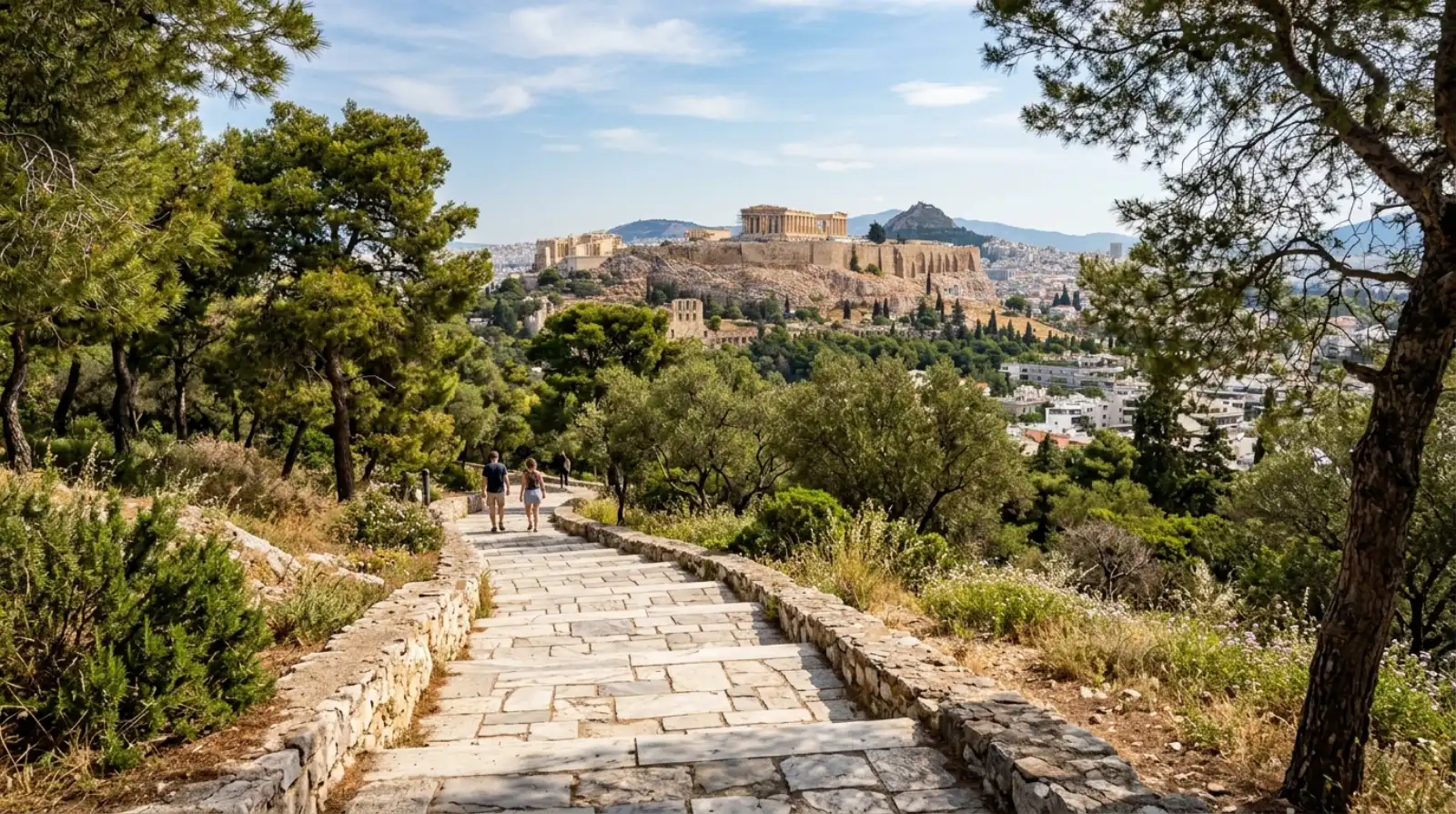
Quick Answer: My Athens Packing Essentials
Compare eSIM plans
This search box is provided by a booking partner and sets cookies.
Booking with a partner may earn this site a commission at no cost to you.
For Athens, I pack breathable cotton and linen clothing, grippy flat shoes for the Acropolis' polished marble, a Type C/F power adapter (standard 230V European sockets), some Euro cash for tavernas and kiosks, a modest scarf for Orthodox churches, and sun protection — all in one carry-on. My benchmark quantities: 4–7 pairs of underwear, 3–5 tops, and one pair of jeans. European and international travellers should carry an EHIC/GHIC card alongside travel insurance. Below, I break it down season by season.
How I Check Athens Weather Before Packing
Before anything goes in my case, I check the Athens weather by month breakdown — Athens has a Mediterranean climate with hot, dry summers and mild, wet winters, so the season dictates almost every choice below.
Packing for Athens in Summer (June–August): Beating the Heat
For June through August, I pack almost exclusively in linen and cotton — Athens regularly tops 35°C, and anything synthetic becomes unbearable by mid-morning. I never travel without SPF 50 and a wide-brimmed hat; a refillable bottle is essential too, as the drinking fountains around central Athens are free. Leather sandals from a local label like Ancient Greek Sandals, sold near the Acropolis entrance and in Plaka, are the classic buy — but their smooth leather soles slip on polished marble, so for the climb itself I wear shoes with proper grip. When the city overheats, locals escape to the beaches at Glyfada and Vouliagmeni on the tram line — worth copying for an afternoon.
What to Wear in Athens in Spring and Autumn: Why Layers Win
In April, May, September and October, layers win — Spring and autumn can see 25–26°C afternoon highs drop to 14–15°C by evening. My base is a capsule of 5–6 pieces that all mix: two cotton or linen tops, one pair of trousers, one midi skirt or dress, a light jacket or cardigan, plus a scarf. That scarf does double duty — an evening layer and an instant cover-up for the Greek Orthodox dress code, which requires covered shoulders (and knees) in churches and monasteries. Shoulder season is the smart window: the Acropolis is more manageable and less crowded off-peak, with shorter ticket queues, and the sea stays warm enough to swim from September into early October, so I keep a swimsuit in. I plan my day trip to Meteora in these months too, when the monastery dress code is easier to manage in mild temperatures.
Winter (November–March) is a different bag: mild but often wet, so I add a compact umbrella or waterproof, a fleece mid-layer, one pair of jeans and closed shoes with grip — rain plus marble is genuinely slippery. Carry your EHIC/GHIC card and travel insurance details just in case. Winter Athens is the city of museums without the crowds.
My Clothing Checklist: What to Wear in Athens
My Athens wardrobe centres on smart-casual, breathable cotton, linen or bamboo outfits that work from the Acropolis at midday to a taverna at night.
Best Footwear for Athens' Marble Streets and Hills
Acropolis paths are polished, slippery marble, so non-slip walking shoes are the single most important item I pack: grippy closed-toe trainers for the ruins and hills, plus durable sandals for flatter city streets. Flip-flops are fine for the beach but not for the Acropolis descent, where smooth soles frequently slip on polished marble. For cobbled Plaka streets, handmade leather sandals from a Greek label like Ancient Greek Sandals, made in Greece, are worth trying in person in Athens.
Dress Code Tips for Churches, Monasteries and the Acropolis
The rule at Greek Orthodox sites: cover your shoulders and knees, men and women alike. The Acropolis itself has no strict dress code — shorts and vest tops are common there in summer. Churches and monasteries do enforce the rule, so I pack a lightweight scarf that folds into my daypack, plus knee-length bottoms or a longer dress. This matters most on a day trip to Meteora, where monasteries enforce the rule strictly and some provide wrap-around skirts at the entrance for women in trousers. Tavernas are casual, but rooftop bars and upscale restaurants expect smart-casual, and some high-end venues and cruise-ship casinos require a jacket for men. A light blazer or smart shirt covers both without weighing down your bag.
Toiletries, Makeup and the 100ml Hand-Luggage Rule
I fly to Athens with carry-on only, so every liquid must be 100ml or less and fit in one transparent bag. Here's how I keep my toiletries compact without sacrificing the essentials.
Sun Cream and Heat Essentials: What I Never Leave Behind
Athens tops 35°C in July, so my kit is built around sun protection: SPF 50 sunscreen, UV400 sunglasses and a wide-brim hat come on every trip. A refillable water bottle is non-negotiable — there are free drinking fountains around the Acropolis, and I refill at my hotel before climbing up. Electrolyte sachets are a trick from CN Traveller's editors, who swear by Ancient and Brave salts for Greek-island heat; they've saved me on 38°C afternoons in Plaka. Budget tip: sunscreen bought locally in Greek pharmacies or supermarkets is reasonably priced, so there is no need to over-pack before flying.
Where to Buy Forgotten Essentials in Athens
If you under-pack, central Athens has you covered. Look for a φαρμακείο (pharmacy), marked by a green cross, for sunscreen, after-sun and basic medications; prices are standard local retail. Sklavenitis and AB supermarkets stock everything from toiletries to plug adapters at standard local prices. Shops around Monastiraki and Ermou street sell cheap flip-flops, hats and beach gear for a last-minute island day trip. The only things I'd never buy there are prescription medicines, so bring those with you.
Electronics, Plugs and Adapters Guide
Greece uses standard Type C and Type F European plugs at 230V. Visitors from countries using different wall sockets need a simple plug adapter. Here's how I keep my kit charged in Athens.
Cameras and Gear for Capturing the Acropolis Views
A modern smartphone or lightweight DSLR is ideal for capturing Athens. Timing matters more than heavy gear — shooting during golden hour from Philopappos Hill or Anafiotika captures warm light on the Parthenon marble without harsh midday glare. Bring a spare battery and power bank, as navigation and photography in summer heat drain batteries quickly.
Documents, Money and Health Essentials: What I Bring
The final layer of my Athens packing list: travel documents, payment cards, an EHIC/GHIC card and comprehensive travel insurance.
Using Money, Cards and Contactless in Athens
Athens is one of Europe's most card-friendly cities — but I still carry cash. Contactless, including Apple Pay and Google Pay, works almost everywhere, yet kiosks (periptero) and stalls at the Monastiraki Flea Market prefer Euro notes, so I carry a modest amount in small bills. I withdraw from Alpha Bank, Piraeus Bank or the National Bank of Greece machines and avoid Euronet ATMs, which push dynamic currency conversion at poor rates — always decline. A fee-free travel card such as Revolut or Caxton, ordered before departure, beats airport bureaux de change. My rule: card by default, cash for small buys and tips.
Medications and a Basic Travel First-Aid Kit for Greece
Two items earn their place every trip: blister plasters and rehydration salts. Summer heat regularly tops 35°C, so I pack paracetamol, ibuprofen, an antihistamine, insect repellent and plasters. Prescription medications go in original labelled packaging with a GP letter. Greek pharmacies (φαρμακείο, green cross) are excellent and run on rotation schedules. European and UK travellers should carry an EHIC/GHIC card alongside travel insurance, ensuring coverage for state medical treatment and emergency repatriation. Keep the kit in your carry-on.
How I Pack for Safety: Anti-Theft Tips for Athens
Is Athens safe? Yes — overwhelmingly so — but I pack like someone who's shared a rush-hour Metro carriage with a pickpocket. The risk is opportunistic theft in predictable spots: Metro Line 2 (the red line) between Syntagma and Acropolis, the crowds around Monastiraki, and the Acropolis entrance queue, where distraction teams work.
My main defence is an anti-theft crossbody bag worn zipped and front-facing; RFID blocking is optional, back pockets and open totes are not. I split cash and cards between two places, leave my passport in the hotel safe with a photocopy in my wallet, and never leave my phone on a street-table edge.
What I Add for Beach and Island Day Trips
The Athens Riviera is under an hour from the centre by tram or bus, with Vouliagmeni the easiest option and Lake Vouliagmeni a warm-water alternative. Ferries from Piraeus run to Hydra (about two hours, car-free — donkeys and your own feet are the transport), Aegina (roughly 40–75 minutes, famous for pistachios) and Poros.
The beach add-on kit is small: swimsuit, quick-dry towel, reef-safe sunscreen SPF 50, flip-flops, a spare t-shirt, a folded water bottle, and proper walking shoes for Hydra's cobbled lanes, all in a packable pouch. (I check the forecast before setting off, and an eSIM for Greece keeps ferry tickets handy.)
How I Pack for a 3–5 Day Athens City Break: Carry-On Only
Five days in Athens with nothing but a carry-on works: a capsule wardrobe in light fabrics, two pairs of shoes maximum — one worn. Standard European short-haul cabin allowances cover a carry-on bag plus a personal item for flights taking roughly 3 to 4 hours.
Inside the case: packing cubes for clothing and toiletries, dirty laundry in a compression sack. A packable daypack such as the Tortuga Outbreaker Daypack carries water, sun cream and a layer for air-conditioned museums. With no bag-drop queue, you're on Metro Line 3 to the centre in around 40 minutes; a sink wash at the hotel covers the rest.
My Recommended Gear and Where to Book Your Athens Trip
Over years of trips I have refined my Athens kit down to a few reliable pieces, from carry-on luggage that fits Ryanair and easyJet cabin limits to grippy shoes for the Acropolis marble. Local purchases — like leather sandals near Monastiraki — are often cash-only, so I always budget a little extra.
Flights, Transfers and Booking Practicalities
Direct flights connect major European cities to Athens in 2.5 to 4 hours. Aegean Airlines, Lufthansa, Air France, British Airways, easyJet and Ryanair operate regular services with off-peak return fares often starting from €60–€120 when booked a few weeks ahead. Athens International Airport (Eleftherios Venizelos) connects to the city centre two ways: Metro Line 3 reaches Syntagma in roughly 40 minutes and beats traffic at rush hour, while the X95 bus runs 24 hours to Syntagma square and costs only a few euros. Check your passport validity before flying, and if you land late at night, pre-book a transfer.
Marble is the surface that decides your shoes
The path up to the Acropolis, the streets of Plaka and the Areopagus rock are worn marble and limestone, polished by several million visitors, and they are slippery when dry and worse after rain — the descent is where people come unstuck, not the climb. Grip matters more than support here. The other packing rule with an actual enforcement mechanism is the dress code at monasteries and churches: shoulders and knees covered, long trousers for men. Wraps are usually lent at the door, but a light scarf in the bag saves the queue.
FAQ
Here are the questions readers ask me most about packing for Athens.
Do travellers need a plug adapter for Athens?
Greece uses standard European Type C and Type F plugs at 230V/50Hz. Visitors from countries using different plug shapes (such as the UK, US, or Australia) need a simple plug adapter.
Can I wear shorts and trainers to the Acropolis?
There is no strict dress code at the archaeological site itself, so shorts are fine — but the marble is polished and slippery, so grippy trainers beat flip-flops. Inside Orthodox churches and monasteries, cover shoulders and knees.
What should I pack for Athens in July and August?
Lightweight linen and cotton clothing, high-SPF sunscreen, sunglasses, a hat and a refillable water bottle. Add breathable walking shoes and a scarf for church visits; locals escape to Athens Riviera beaches at midday.
Should I take cash or card to Athens?
Cards are accepted almost everywhere in central Athens, but small tavernas, kiosks and markets prefer Euro cash. Use fee-free travel cards and official bank ATMs rather than airport exchange.
Can I do a 5-day Athens trip with carry-on only?
Yes — a proven strategy. Keep toiletries under 100ml per container, use packing cubes, limit yourself to two pairs of shoes, and buy anything forgotten at pharmacies or supermarkets like Sklavenitis.