
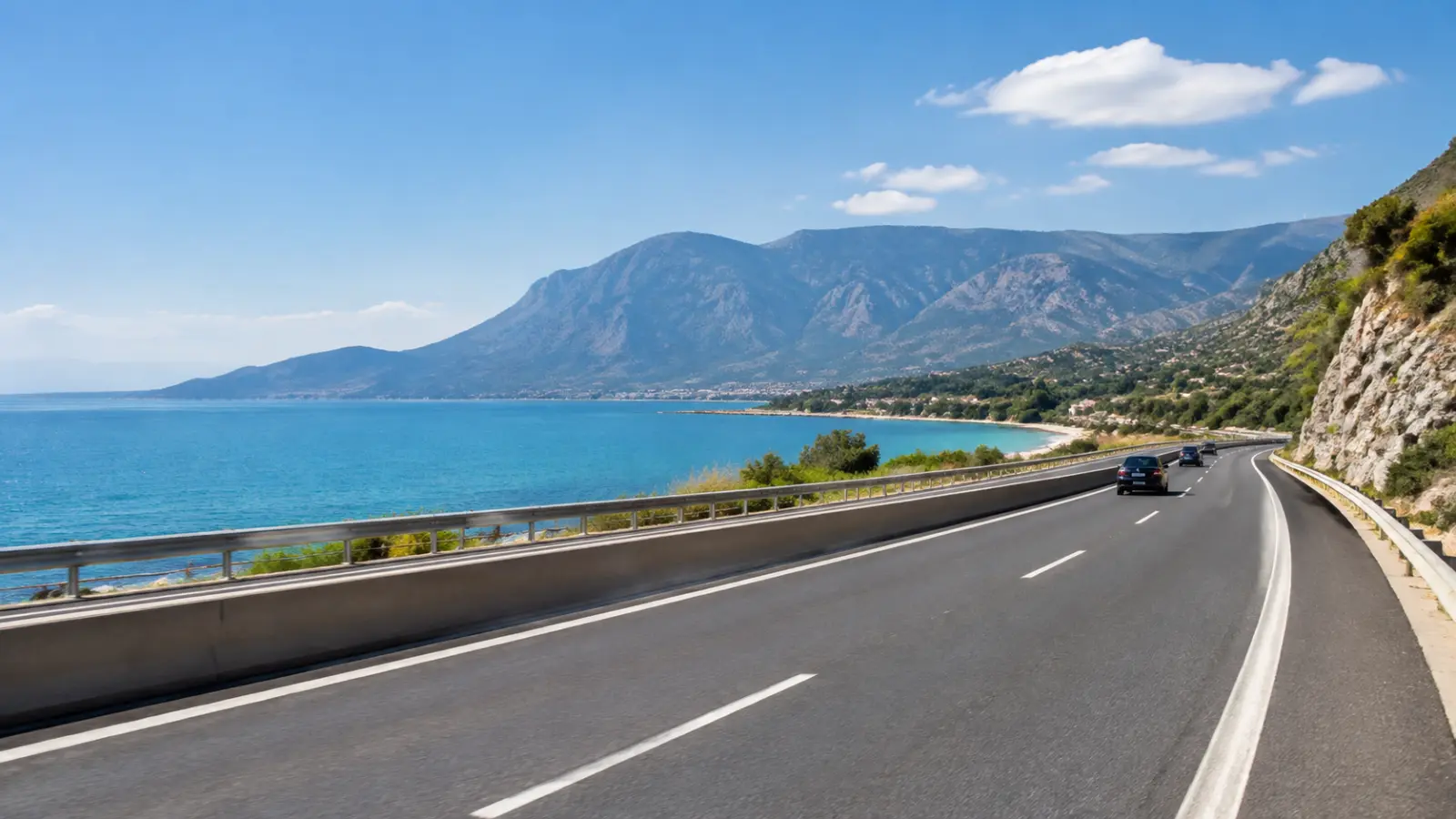
Driving in Greece at a glance: rules, costs and the best travel choice
Greece combines modern motorways with narrow mountain roads, right-hand traffic and electronic tolls that visitors should plan for before collecting the keys.
Quick rules to remember before you collect the keys
- Traffic drives on the right; all signs are in kilometres per hour.
- Hand-held mobile phone use is prohibited under the Greek Traffic Code.
- Save 112: the free EU-wide number for police, ambulance and fire.
- Use the horn in built-up areas only to prevent genuine danger.
- Children under 10 may not travel in the front seat.
- The Hellenic Police enforce road rules nationwide, with stricter speed checks introduced in late 2025.
Driving in Greece is on the right-hand side of the road, with traffic from the right having priority at junctions unless signed otherwise.
Who should hire a car, and when another option is better
A hire car suits families with luggage, multi-stop mainland routes and holidays taking in remote beaches or villages. KTEL runs intercity buses across Greece; check the local operator's official site for frequency and seasonal timetables. A taxi transfer simplifies the airport-to-hotel leg after a long flight, especially for late arrivals. Read your agreement on additional drivers, deposits, insurance excess and ferry permission before carrying a hire car between islands.
Road conditions: what changes between cities, mainland and islands
Conditions shift quickly: a single hour can include a toll expressway, a mountain pass and a coastal village street. Mountain routes demand reduced speed, wider following distance and more time than navigation apps suggest. Island roads are often narrow and shared with scooters and parked cars. Hold your lane on bends and at junctions, choose the car by route rather than price, and leave buffer time before ferries, check-in or return flights.
Documents and legal requirements for driving in Greece
Licences, IDPs and driving eligibility
The legal driving age in Greece is 18, though car hire companies typically require drivers to be at least 21 with one year of experience. EU/EEA licences are valid directly; non-EU licence holders (including US, Canadian, and Australian drivers) should obtain a 1968 International Driving Permit (IDP) before travelling. Always carry your original physical licence and passport.
Cross-border and vehicle documentation
If driving a personal or leased foreign-registered car into Greece, carry the vehicle registration document (logbook), international motor insurance certificate (Green Card where applicable), and written keeper authorization. Confirm cross-border insurance coverage, roadside assistance, and local emergency contact numbers in advance.
Mandatory vehicle kit and practical items to carry
Greek regulations require a warning triangle, fire extinguisher and first aid kit; confirm they are present and reachable before you leave the depot. Photograph the boot contents at collection, and note anything missing, damaged or expired in the rental agreement. Carry bottled water, a charged phone, offline maps, sunglasses and a charging cable. Phones must be used hands-free, and any mounting bracket must not obstruct the windscreen.
Insurance, excess, deposits and rental agreement checks
Collision Damage Waiver limits your liability for damage rather than removing it, and often excludes windscreen chips, tyre damage, undercarriage scrapes, lost keys, misfuelling, off-road driving and unauthorised ferry crossings. A credit card deposit is a temporary pre-authorisation: check that your card has sufficient available credit and that the issuer permits international pre-authorisations. Check the fuel policy, authorised drivers, ferry permissions, roadside assistance numbers, accident procedure and return-time grace period, then compare total cost including the excess, young-driver and additional-driver fees.
Greek road rules: speed, priority, alcohol and parking
Speed limits, cameras and reading signs
| Road Category | Speed Limit (km/h) | Speeding Fine (EUR) | Practical Rule |
|---|---|---|---|
| Urban / Built-up Areas | 50 km/h | €40–€100 | Watch for pedestrians and lane-filtering scooters |
| Rural / Regional Roads | 90 km/h | €100–€350 | Slow down on unlit mountain curves |
| Expressways / Dual Carriageway | 110 km/h | €100–€350 | Keep right except when overtaking |
| National Motorways (Autokinitodromos) | 130 km/h | €100–€350 + points | Toll plazas accept cards and cash |
| Snow Chains Fitted | 50 km/h maximum | €80 fine if missing | Mandatory in mountains during winter alerts |
Limits are posted in kilometres per hour: 90 km/h on many rural roads, up to 110 km/h on expressways, 130 km/h on motorways where signposted, 50 km/h in built-up areas and 30 km/h in residential zones where posted. With snow chains fitted, the maximum is 50 km/h. Posted signs override general guidelines, and not every motorway carries the maximum figure. Cameras and police patrols operate nationwide, with wider automated checks reported from late 2025 and higher fines for repeat or serious speeding.
Driving right: lanes, overtaking, priority and roundabouts
Hold the right-hand lane and overtake on the left only where markings and sight lines allow. At uncontrolled junctions, priority generally goes to traffic coming from the right, but signs, lights, give-way lines and stop markings override it. Roundabouts follow the same logic: priority depends on the sign and markings at each entry rather than a universal convention, so entering traffic may hold priority where nothing is signposted. If the arrangement is unclear, yield.
Seat belts, child seats, helmets and mobile-phone use
Belts are compulsory for driver and all passengers where fitted, and helmets for motorcycle and scooter riders and passengers. Children under 10 may not travel in the front seat, children under 3 must sit in a suitable child restraint, and child seats apply for children up to about 4 years. Holding a phone while driving is illegal: set navigation before moving off and use a legal hands-free system.
Alcohol, fines and what not to risk
The standard blood alcohol limit is 0.5 g/l (0.05 per cent), or about 0.25 mg/l in breath, with stricter limits for novice and professional drivers. The Hellenic Police run roadside checks, drivers must cooperate with lawful testing, and tourists are not exempt. On-the-spot fines are typically settled at a Public Treasury office within 10 days. Arrange a taxi, transfer or sober driver in advance.
Budgeting a Greek road trip: tolls, fuel, parking and route planning
Tolls, fuel and route-cost planning
Tolls apply on major corridors including Attiki Odos around Athens, the national Ethniki Odos network, Egnatia Odos across northern Greece, Olympia Odos linking Athens and Patras, and Moreas through the Peloponnese. Many stations accept cash and card, some offer a transponder lane such as Fast Pass, and a few are entirely cashless. Attiki Odos charges a modest fee for a standard car at most entry points, though rates change by exit and vehicle class. Use the operator's online toll calculator, add projected fuel for your planned kilometres, and build a 10–15% contingency for detours.
Parking, kerb markings and city-centre strategy
Yellow kerb lines mean parking or stopping is prohibited, with the exact restriction confirmed by the nearest roadside sign. In central Athens, street parking is scarce, metered and often subject to resident-only hours, making an official multi-storey or hotel car park the safer choice. Greek law prohibits parking within 3 metres of a fire hydrant, 5 metres of a junction and 15 metres of a public-transport stop. Never leave valuables visible. If your Athens accommodation has no parking, collect your rental only when leaving the city.
Build a realistic self-drive budget before you book
Add the excess or insurance waiver, fuel policy (full-to-full, prepaid tank or per-litre top-up), tolls, parking, extra-driver fees, child seats and any amendment or cancellation charges to the advertised daily rate. The credit card deposit, often substantial depending on vehicle class and excess, temporarily blocks part of your available limit. Island ferries require a separately booked vehicle space, typically in the mid-range for a standard car each way, and many agreements prohibit crossings without written permission. Compare offers at identical rental periods, mileage allowances, fuel policies, excess levels and cancellation terms.
Routes that suit a hire car, and routes that may not
A car earns its cost when your itinerary includes dispersed rural sites or accommodation beyond walking distance of public stops. The Peloponnese rewards self-drive: Nafplio, Ancient Olympia, Monemvasia and the Mani villages lie hours apart by infrequent bus. Central Athens is usually faster by metro, tram and on foot, so if your stay centres on Plaka, Syntagma and the Acropolis, collect the rental only when departing. Islands need individual assessment: Crete's size and sparse bus frequency make a car practical, while a compact island with a walkable port town may not justify the ferry surcharge. Compare combined hire, fuel, toll and ferry cost against pre-booked transfers or taxis.
Hiring a car in Greece: vehicle choice, islands, safety and booking
Choosing a rental car: size, transmission and age rules
Choose the smallest car that fits your passengers, luggage and route. Automatic cars are in high demand across Greece during summer, so reserve well in advance if you prefer not to drive a manual. Minimum age, licence tenure and young-driver surcharges vary by supplier, so check the terms before booking car rental in Athens.
Collection and return: inspect the car and avoid disputes
Photograph the bodywork, wheels, windscreen, roof, interior, odometer and fuel gauge before you drive away, and add any unmarked damage to the signed condition report. Confirm the excess or deposit held, authorised drivers, return time and roadside assistance number. Test lights and wipers, keep your fuel receipt if the policy is full-to-full, then repeat the photos at return.
Taking a car on Greek island ferries
A passenger ticket does not include car deck space; book it separately with the vehicle's dimensions. Car decks sell out quickly on popular routes, so reserve up to three months ahead in high season. Many rental agreements also require written permission for island crossings and restrict insurance territory. Piraeus is Athens' main port; confirm gate, arrival time and boarding documents. Mainland alternatives such as Athens to Nafplio or day trips from Athens skip the ferry entirely.
Compare car hire
This search box is provided by a booking partner and sets cookies.
Booking with a partner may earn this site a commission at no cost to you.
Breakdowns, collisions and emergency contacts
If anyone is injured or the scene is unsafe, stop safely, switch on the hazard lights and call 112. For a non-urgent breakdown, ring the roadside assistance number in your rental agreement rather than arranging towing or repairs yourself. Photograph the scene, note the time, location, registrations and the other driver's details, and keep receipts for your insurer.
Compare transfer prices
This search box is provided by a booking partner and sets cookies.
Booking with a partner may earn this site a commission at no cost to you.
Age rules bite harder than licence rules
The legal driving age in Greece is 18, but hire companies set their own floor and it is usually 21, sometimes 23, with a young-driver surcharge on top for renters under 25 and whole vehicle categories closed off. Some suppliers also require the licence to have been held for at least a year. An EU licence is accepted as it is; visitors from outside the EU should carry an International Driving Permit alongside their national licence. Enter the driver's real age before comparing prices — otherwise the cheapest results shown are quotes you cannot actually book.
FAQ
What licence is required to drive in Greece?
EU/EEA licence holders drive with their standard national licence. Non-EU visitors should carry their national photocard licence accompanied by an International Driving Permit (1968 format).
What are the speed limits in Greece?
50 km/h built-up, up to 90 km/h rural, 110 km/h main roads, 130 km/h motorways, as posted. Signs show km/h, not mph.
Do I need an International Driving Permit for Greece?
EU/EEA licences are accepted without extra documents. Non-EU licences, including US, Canadian and Australian ones, should be accompanied by an IDP. Verify any supplier-specific rules before picking up your vehicle.
Can I take a hire car on a ferry to a Greek island?
Sometimes, subject to rental agreement, insurer and route. Get written supplier permission, book a car-deck ticket, and reserve early on popular Piraeus routes.
What must I carry in a car when driving in Greece?
Warning triangle, fire extinguisher and first-aid kit are compulsory, plus your licence, passport and insurance or rental papers. Photograph the safety kit at collection.